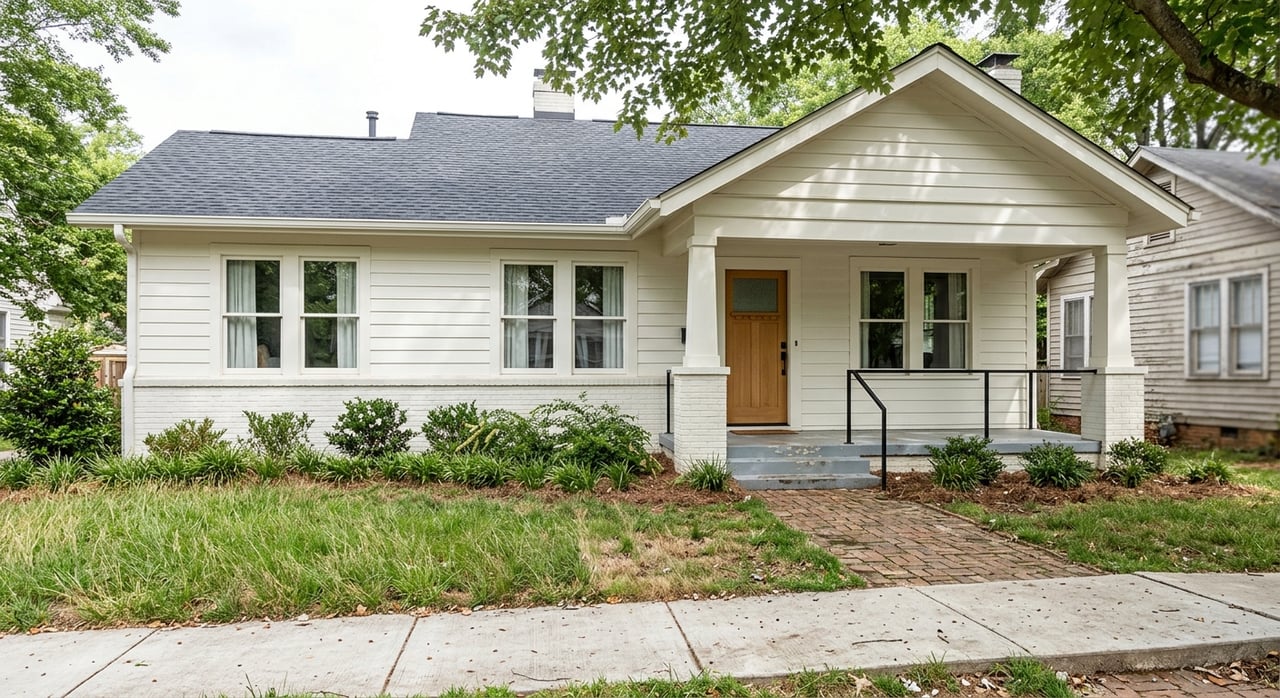
Durham Neighborhood Comparison Guide: Downtown, RTP & Southpoint
April 2, 2026
April 2, 2026
Choosing between Downtown Durham, RTP, and Southpoint can feel tricky because each area offers a very different daily experience. You might be comparing walkability, commute time, housing style, or price and wondering which part of Durham best matches your goals. The good news is that each area has a clear identity, and once you understand how they differ, your decision gets much easier. Let’s dive in.
The biggest difference between Downtown Durham, RTP, and Southpoint is not just price. It is how each place is built and how you are likely to live there day to day.
According to the latest Durham market snapshot, the citywide median listing price is $399,999, median rent is $1,590, and median days on market is 50. But for this comparison, the more useful lens is land use: downtown is Durham’s urban core, RTP is an employment-focused campus area, and Southpoint is a suburban commercial corridor with nearby housing.
Downtown Durham is the most urban option in this comparison. The city’s Comprehensive Plan Update describes downtown as a place with a high concentration of multifamily housing, commercial spaces, restaurants, offices, parks, and green space, along with connected sidewalks, bike lanes, and transit infrastructure.
Discover Durham’s overview of downtown also notes that the area is about one square mile and divided into seven subdistricts. If you want a compact environment where daily errands, dining, and entertainment can be closer together, downtown stands out right away.
Downtown has the densest housing mix of the three areas. The city plan identifies apartments, condominiums, townhouses, and senior residences as part of the local housing stock.
Current market data places downtown at about $689,995 median home price and $1,840 median rent. The broader 27701 ZIP code is also above the city average, with a $499,000 median listing price and $1,822 median rent, and downtown has the highest price per square foot in this comparison at $644.
If you want the easiest car-light lifestyle, downtown is the strongest fit. The city plan notes existing and planned high-quality transit in the area, while Durham’s capital improvement efforts include the Durham Rail Trail and Durham Station transit improvements, along with added downtown bike lanes.
That does not mean every trip will be car-free. It does mean downtown offers the strongest setup for people who value connected sidewalks, transit options, and easier access to destinations without always relying on a long drive.
RTP works differently from a typical neighborhood. Research Triangle Park is a 7,000-acre research park founded in 1959, home to more than 55,000 innovators and more than 385 companies.
That matters because RTP is not built like a traditional downtown. Durham’s planning framework classifies employment campus areas as large, planned, car-oriented places centered on offices, laboratories, and research facilities, with some supporting mixed uses.
The residential story in RTP is evolving. The park’s official site says Hub RTP is its downtown district, with chef-driven restaurants, local retail, gathering spaces, a walkable mixed-use environment, and the first-ever residents living there.
On the Durham planning side, the RTP South rezoning covers a 458-acre area south of Hub RTP and is intended to support transit-oriented development and multimodal projects. The place-type map includes apartment and townhouse neighborhoods, mixed residential neighborhoods, mixed-use neighborhoods, suburban commercial areas, and a Transit Opportunity Area.
In current market snapshots, RTP is the lowest-priced of the three areas compared here. It comes in at about $375,000 median home price and $1,566 median rent.
For many buyers and renters, RTP’s biggest advantage is proximity to work. Hub RTP sits next to I-40 and NC-54, the GoTriangle Regional Transit Center connects regional and local bus routes, and RTP Connect offers subsidized rides within the park. If you work in RTP and want the shortest relationship between home and job, this area deserves a close look.
Southpoint is best understood as a suburban commercial corridor rather than a downtown-style district. It is anchored by The Streets at Southpoint, which is located at 6910 Fayetteville Road near I-40 exit 276 and includes more than 150 shops, outdoor dining, a movie theater, free parking, and a lifestyle area.
This area appeals to people who want convenience built around errands, shopping, dining, and highway access. It is a different rhythm from downtown and a different purpose from RTP.
The housing around Southpoint feels more suburban and newer than downtown. Durham’s comprehensive plan defines suburban commercial areas as shopping areas along larger roads with large parking lots, while a recent Fayetteville Road and Highway 751 development plan near Southpoint requires both residential and non-residential uses and at least two housing types from single-family detached homes, townhomes, and apartments.
That points to a corridor shaped by car access, with nearby residential pockets and newer mixed-use infill. Current market data places the Southpoint neighborhood at about $475,000 median home price and $1,423 median rent. The broader 27713 ZIP code is about $409,999 median listing price, $1,438 median rent, and 44 median days on market.
Southpoint may be more connected than you expect for a suburban corridor. Durham’s Fayetteville Street Corridor information shows that GoDurham Route 5 serves Fayetteville Street every 15 minutes and connects local neighborhoods to Downtown Durham, Southpoint Mall, and other destinations.
GoTriangle also lists The Streets at Southpoint as a park-and-ride served by routes 800 and 805, plus GoDurham Route 5. So while Southpoint is still more car-oriented than downtown, it offers useful transit connections along a major retail corridor.
Here is the simplest way to think about these three areas.
| Area | Best fit for | Housing feel | Median home price | Median rent |
|---|---|---|---|---|
| Downtown Durham | Urban lifestyle seekers | Dense, multifamily, walkable | $689,995 | $1,840 |
| RTP | RTP workers and commute-focused buyers | Employment-centered, evolving mixed-use | $375,000 | $1,566 |
| Southpoint | Suburban convenience seekers | Car-oriented corridor with nearby housing | $475,000 | $1,423 |
Based on the current snapshots, downtown is the most expensive, Southpoint sits in the middle, and RTP is the least expensive of the three.
The right choice depends on what matters most in your daily life. Price is important, but so are commute patterns, housing type, and how you want your week to feel.
Downtown is the best fit if you want Durham’s most urban environment. You may prefer it if you value multifamily housing options, connected sidewalks and bike lanes, and closer access to restaurants, offices, parks, and transit.
You should also expect a higher price point. If lifestyle and walkability are top priorities, that tradeoff may feel worth it.
RTP makes the most sense if your job is in the park or nearby and you want to cut down on commute friction. It is also worth watching if you like the idea of a growing mixed-use district that is still changing over time.
Because RTP is still employment-first in many areas, your experience may depend on whether you are near Hub RTP or adjacent residential zones. This is a practical choice for people who want convenience tied closely to work.
Southpoint is a strong middle-ground option. You may like it if you want access to shopping, dining, parking, and highway connections, along with nearby housing that tends to feel more suburban than downtown.
For many buyers, Southpoint offers a balanced mix of convenience and price. It can be especially appealing if you want a more errand-friendly setup without paying downtown pricing.
If you are deciding between these areas, try comparing them based on your real weekly routine. Think about where you work, how often you drive, what kind of home you want, and how important it is to live near shopping, dining, or transit.
A simple checklist can help:
When you do that, the differences between Downtown, RTP, and Southpoint usually become much clearer.
If you want help narrowing down which Durham area fits your budget and lifestyle, connect with DECO CAPITAL. You will get local guidance, clear next steps, and a team that understands how to match your real estate goals with the right part of the Triangle.
Stay up to date on the latest real estate trends.
At The Cedeno Group, our agents are all fully bilingual in English and Spanish, ensuring seamless communication for our diverse clientele. With extensive experience in the real estate market, we go beyond traditional approaches, offering out-of-the-box opportunities to help clients achieve their real estate goals. Whether buying, selling, or investing, our team is dedicated to making the process smooth, successful, and tailored to each client's unique needs.
Get In Touch With Our Team To Learn More

The Cedeno Group Real Estate
5826 Fayetteville Rd, Suite 206 Durham, NC 27713