Durham Duplex and ADU Rules That Change a Home's Value
August 27, 2026
August 27, 2026
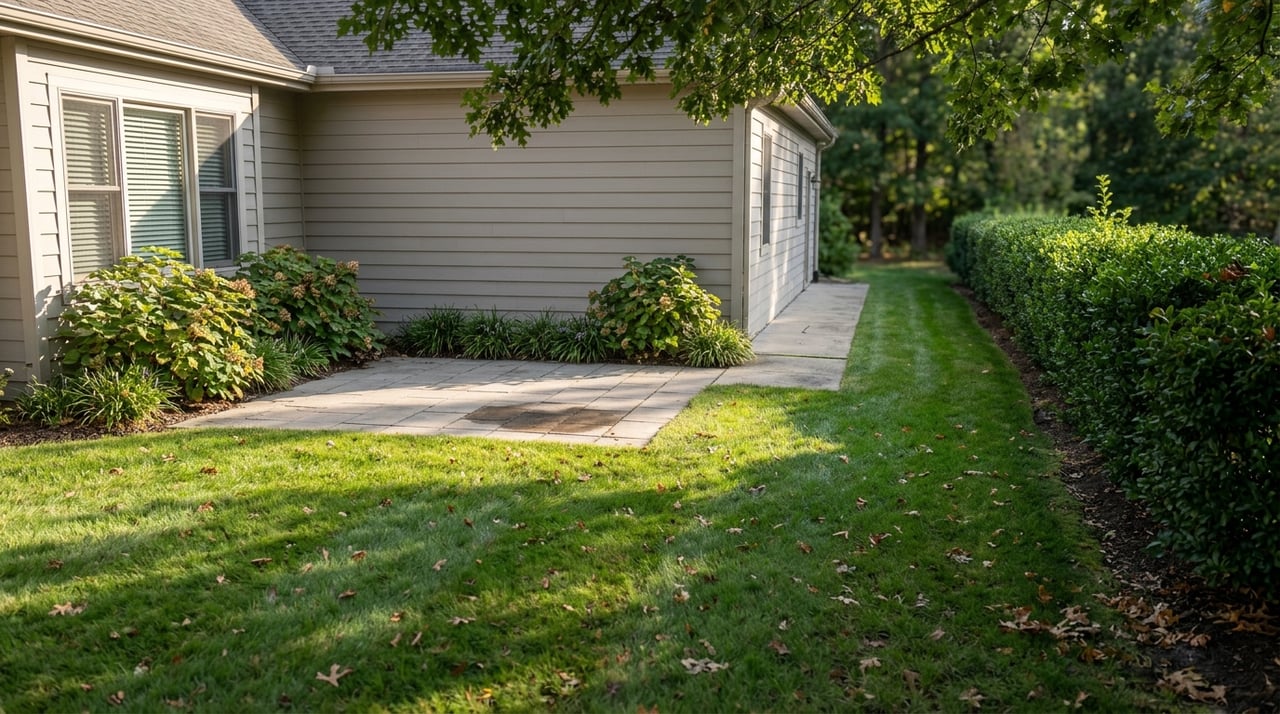
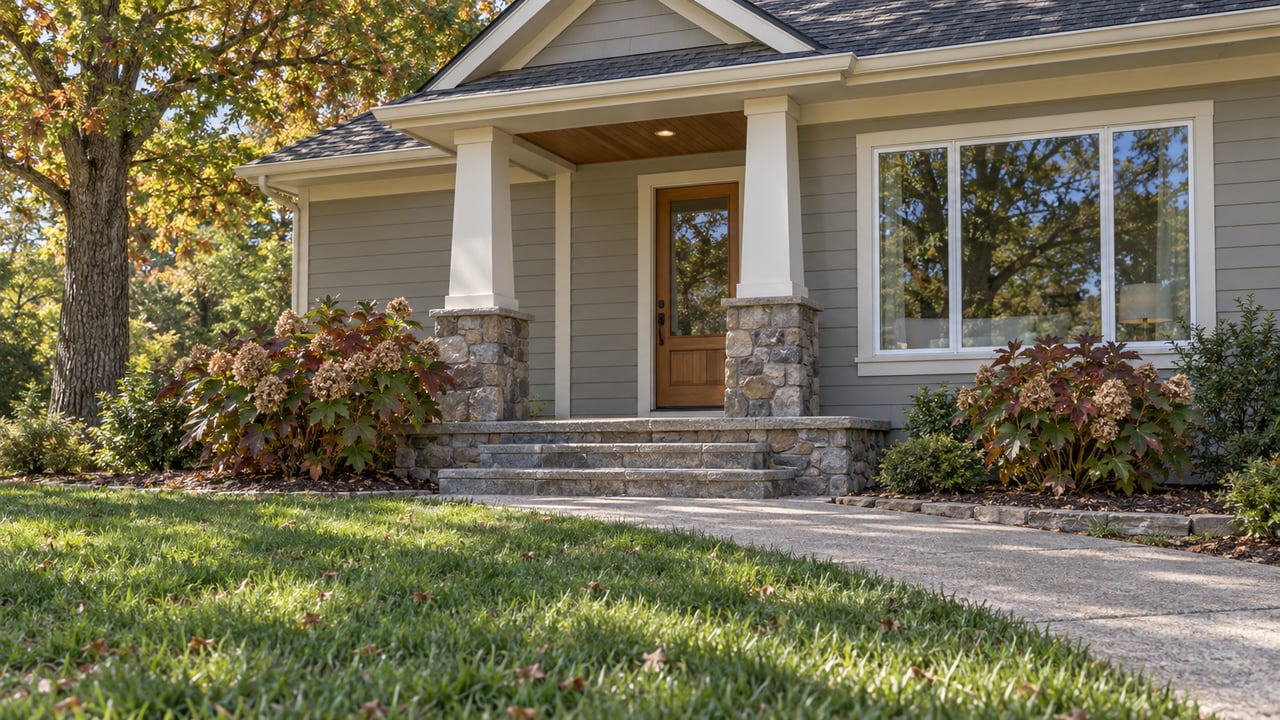
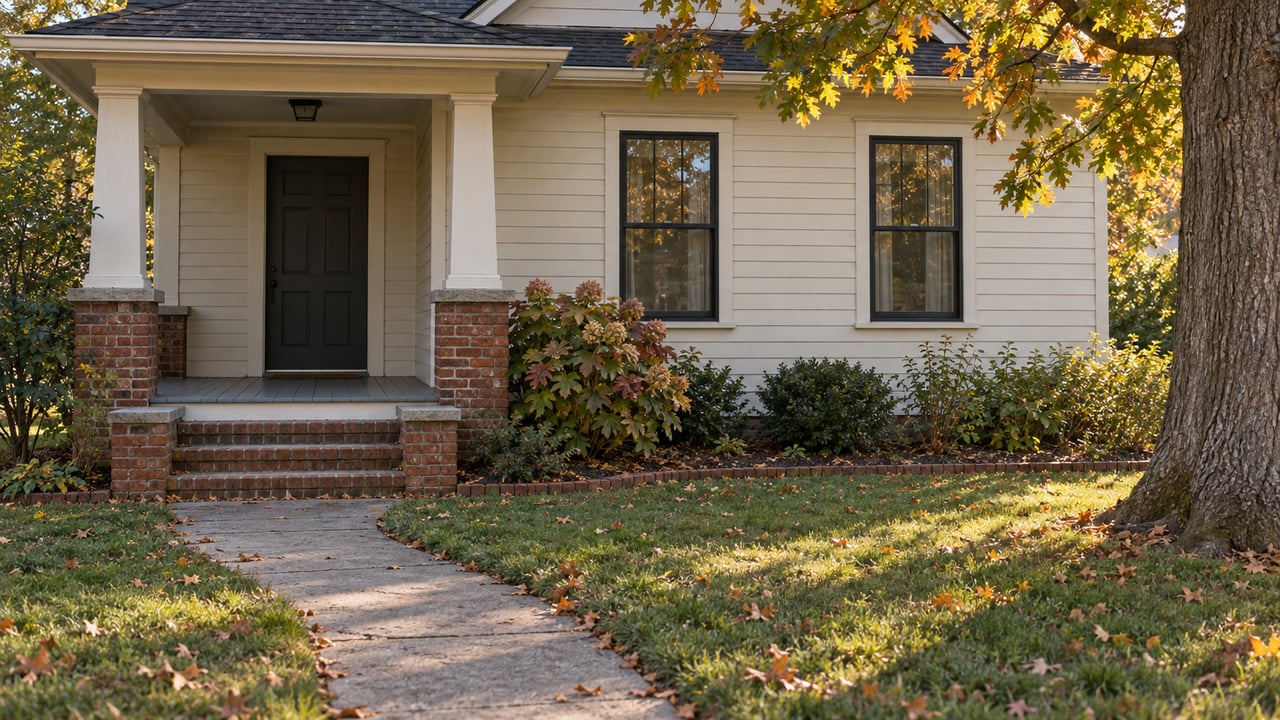
Two houses on the same Durham street, listed within a week of each other, both around 1,400 square feet, both asking $420,000. A buyer comparing them on price per square foot would call it a coin flip. It isn't. As CityBuilder NC explains, one of those lots can legally become three separate dwelling units. The other may have fewer options for adding units, though it may still qualify for an accessory dwelling unit.
The difference has nothing to do with the house. It has to do with a zoning line that runs underneath both properties and shows up on no listing sheet, no comparable sales report, and no walkthrough.
Durham's zoning code has spent the last several years changing what a single-family lot is allowed to become. The mechanism is an ordinance called Expanding Housing Choices, and it does something most buyers never think to ask about: it changes not what a house is, but what a house is permitted to turn into.
For a buyer comparing two similarly priced homes, that permission is worth real money. A lot that can legally support a duplex conversion plus a detached accessory dwelling unit carries rental income potential or simply a stronger resale story than an identical structure without the same multi-unit potential. None of that shows up in a median price. It shows up in the zoning district code printed in small type on the county's own maps.
Expanding Housing Choices followed a contentious public process. Durham's City Council approved the ordinance 6-1 on September 3, 2019, and the county's Board of Commissioners followed with a 5-0 vote on October 28, 2019, amending the city and county's shared Unified Development Ordinance to allow duplexes, accessory dwelling units, and smaller-lot infill in neighborhoods that had been effectively single-family only since the 1960s. The stated goal was to let existing homeowners add supply in already-built neighborhoods rather than pushing all new growth to the county's edges.
The road to that September 2019 vote was not smooth. Planning commissioners delayed a decision more than once earlier that year after public hearings where residents split sharply, and neighborhood associations in Trinity Park, Watts-Hillandale, Old West Durham, and Tuscaloosa-Lakewood pushed back hard enough that the version which finally passed was narrower than city planners first proposed. As IndyWeek reported, the original draft allowed accessory dwelling units in more zoning districts than the final ordinance did. What passed instead prohibited ADUs alongside duplexes on lots under 2,000 square feet, a late concession to neighborhood concerns about density and character. Durham did not simply throw open the gates in one motion. It negotiated the width of the opening neighborhood by neighborhood before the final vote, and the width still varies depending on where a specific lot sits today.
Then, in 2025, North Carolina's legislature added a new layer on top of Durham's local ordinance. Senate Bill 495 now requires every local government in the state to allow at least one accessory dwelling unit per single-family detached home in residential zones. Durham's own rules already went further than that floor in most of the urban core, but the state law matters for a different reason: it means the ADU conversation is no longer a Durham-specific policy experiment that could theoretically be reversed by a future council vote. It is now a statewide baseline, which makes the added-unit option on a given lot a more durable piece of value than it was even three years ago.
Not every Durham lot got the same upgrade. The ordinance's provisions apply differently depending on which zoning tier and district a specific parcel sits in, and the practical differences are large enough to change how a buyer should read two otherwise identical listings.
| Zoning Situation | What's Actually Allowed | Where This Applies |
|---|---|---|
| Urban tier residential districts | Duplex conversion plus an accessory dwelling unit, up to three total units on one lot in most cases | Most of the city's older, in-town neighborhoods |
| RU-5 and RU-5(2) suburban tier districts | Rules vary by parcel | Specific suburban-tier parcels mapped into these districts |
| Locally designated historic districts, as identified by Site Plan Creator (Morehead Hill, Watts-Hillandale, Old West Durham) | Added density is possible in principle but subject to additional design review that can slow or complicate a project | Parcels within the mapped historic district boundary |
| RS-20 and similar single-family-only districts | Generally limited to one primary dwelling per lot, with duplex conversion difficult without a specific exception, as Steadily explains | Lower-density residential districts outside the mapped EHC areas |
| Countywide under Durham rules; statewide under the 2025 law | One ADU per lot, sized under Durham's own local standard, now guaranteed at minimum by the 2025 state ADU law | Any single-family detached lot in the state |
A house sitting two blocks apart from another can land in entirely different rows of that table. One qualifies for three units. The other may have fewer options for adding units, though it may still qualify for an accessory dwelling unit under state law.
This is not a hypothetical drawn up in a planning department slideshow. Durham's own attachment on duplex standards cites a real example on the ground: a side-by-side duplex at 904 N Gregson, used by planning staff as the reference case for what the ordinance's duplex standards were built around. Under current rules a lot that qualifies can carry a duplex and a detached ADU at the same time, for a maximum of three legal dwelling units where the code allows it.
For a buyer this means the ceiling on a property is not always the structure standing on it today. It is the number of legal units the zoning district will permit tomorrow, and that number is fixed by district, not by ambition.
Durham's housing market has settled into something closer to equilibrium than the sharp appreciation of a few years ago. Over the three months ending in June 2026, the median sale price sat at $425,000, down 1.2 percent from the same period a year earlier, with the median price per square foot down a steeper 8.8 percent over that stretch. Homes were taking about 28 days to sell on average, roughly flat compared to the 27 days it took a year prior. Price growth has flattened, and the market is no longer doing the heavy lifting on equity by itself.
That is precisely the environment where zoning-driven optionality starts to matter more than it did in 2021, when almost any Durham house appreciated regardless of what the lot legally permitted. When the market stops handing out easy gains, the difference between a lot limited to one primary dwelling plus an ADU and a lot that can carry three becomes one of the few remaining levers a buyer actually controls.
Durham's own leadership framed the tradeoff bluntly when the original ordinance passed. Kronberg UA's account of the vote quotes Mayor Steve Schewel saying, "zoning reform isn't magical, but it's crucial." The line also works as a warning for buyers today. The zoning change will not make a house appreciate on its own. It changes what the owner is legally allowed to build, and in a flat market, legal permission is worth more than it used to be.
Before treating two similarly priced Durham houses as interchangeable, a few checks take less time than a single showing appointment.
None of this shows up in a listing description. All of it shows up in what the same house is actually worth to the next owner.
The zoning map does not care what a house looks like from the street. It cares about the line on the parcel, and that line is doing more to set the ceiling on a Durham property than most buyers realize until after closing. If you are comparing two homes that look the same on paper and want to know which one is actually the better long-term hold, The Cedeno Group can walk the zoning district and the numbers with you before you write an offer. Find Your Dream Home — Habla con Nosotros.
This article is general information, not legal, tax or financial advice. Consult a qualified professional about your situation.
Stay up to date on the latest real estate trends.
At The Cedeno Group, our agents are all fully bilingual in English and Spanish, ensuring seamless communication for our diverse clientele. With extensive experience in the real estate market, we go beyond traditional approaches, offering out-of-the-box opportunities to help clients achieve their real estate goals. Whether buying, selling, or investing, our team is dedicated to making the process smooth, successful, and tailored to each client's unique needs.
Get In Touch With Our Team To Learn More

The Cedeno Group Real Estate
5826 Fayetteville Rd, Suite 206 Durham, NC 27713