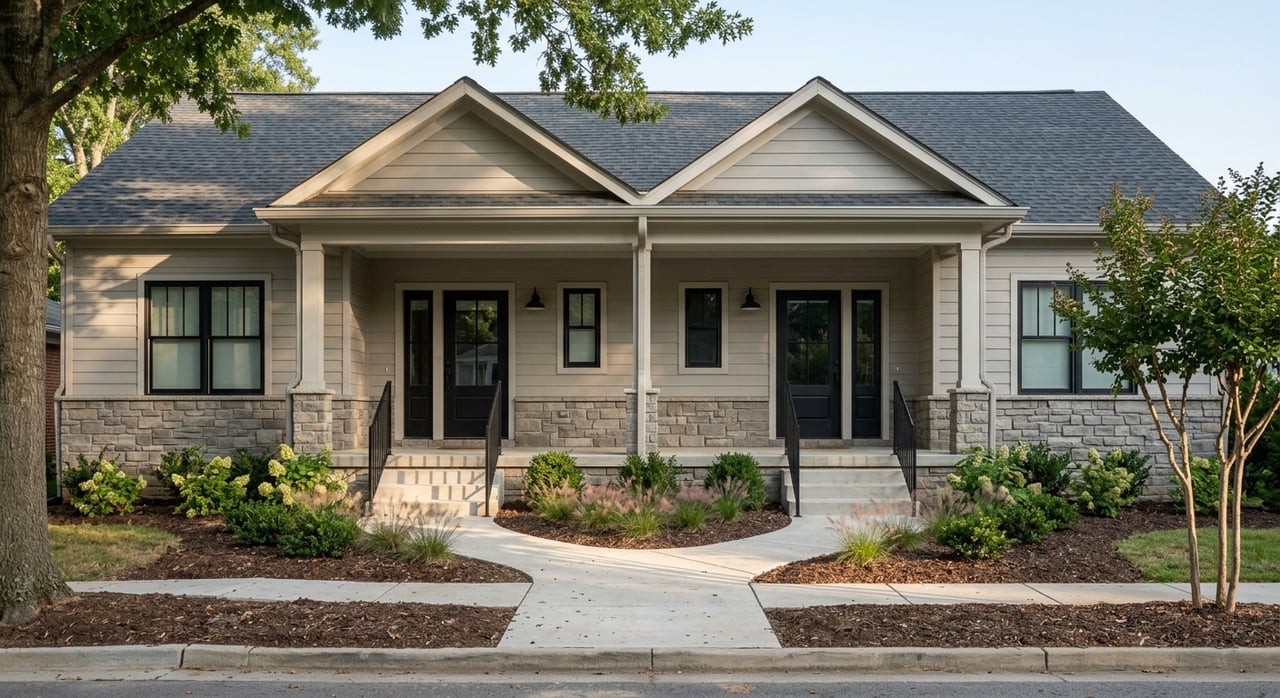
House Hacking in Durham NC: Smart Live-In Options
July 2, 2026
July 2, 2026
If you want to lower your housing cost while building long-term equity, house hacking in Durham can be a smart place to start. The idea is simple: you live in the property and rent part of it out, but the details matter a lot in a market like Durham. With local zoning rules, owner-occupant loan options, and rental realities to think through, you need a plan that fits both your budget and the property. Let’s dive in.
Durham has several traits that make house hacking worth considering. The city’s population was estimated at 301,870 in July 2024, up 6.4% from the 2020 Census, and the median gross rent is $1,508. That combination often puts pressure on monthly housing costs and creates interest in shared or multi-unit living strategies.
Durham’s planning approach also supports more varied housing types than a detached-house-only model. The city’s adopted planning documents describe Established Residential areas as places that may include single-family houses, duplexes, townhouses, and small apartments, with incremental change through accessory dwelling units, or ADUs. In plain terms, that means some of the most practical house-hacking setups already match the way Durham thinks about housing growth.
That said, this is not a market where you should assume instant cash flow. HUD describes the Durham-Chapel Hill rental market as soft, with an estimated 11.2% rental vacancy rate as of December 1, 2024. That means your strategy should be based on conservative numbers, not best-case projections.
House hacking usually means buying a home you will live in and using rent from part of the property to help offset your mortgage and other housing costs. The rental setup can take a few different forms depending on the property and what local rules allow.
For many Durham buyers, the main options are:
Each path can work, but each comes with different financing, zoning, and management considerations.
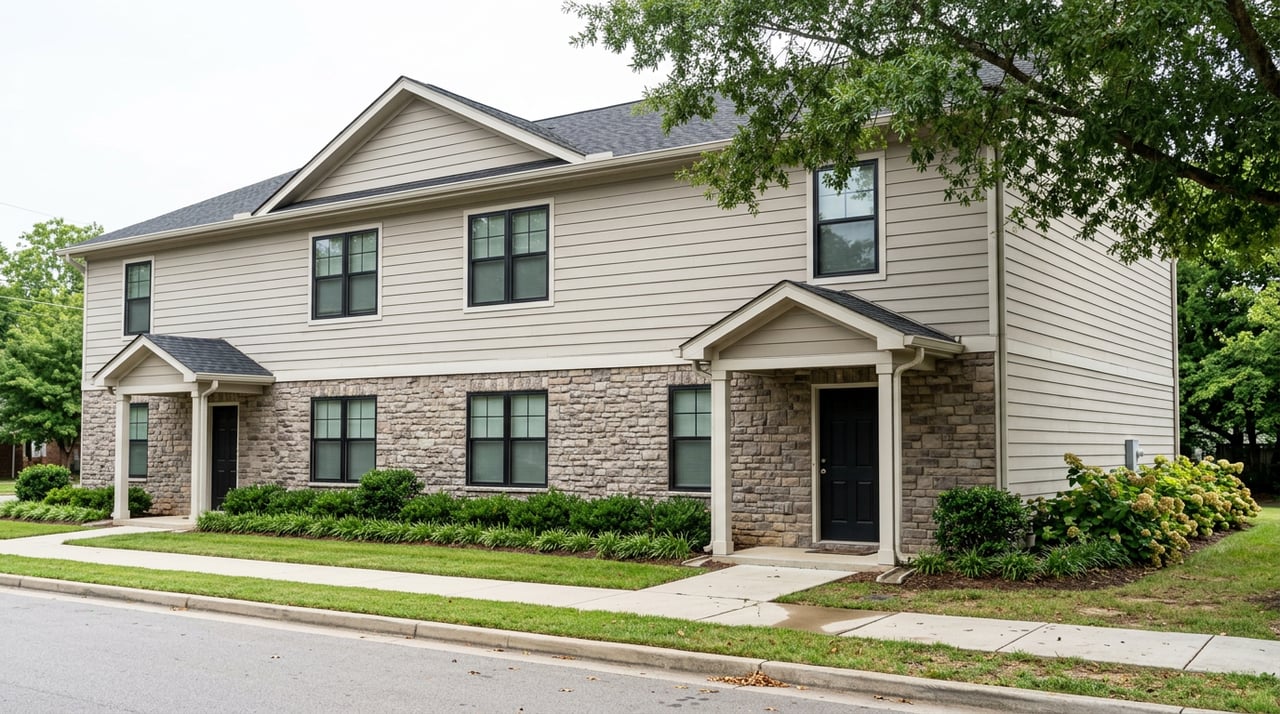
A duplex is often the most straightforward version of house hacking because the property already has two dwelling units. Durham’s Unified Development Ordinance defines an attached duplex as two individual dwelling units on a single lot, and it also recognizes detached duplexes.
For you as a buyer, the main advantage is clarity. A true duplex is already designed as a multi-unit property, which can make rental setup simpler than trying to carve out space in a single-family home. You live in one unit and rent the other, giving you more privacy than a roommate-style arrangement.
The catch is that you should never assume a property works just because it looks like a duplex or was used that way in the past. Whether a specific property qualifies depends on zoning, lot dimensions, and district-specific standards. In Durham, a parcel-by-parcel zoning check is one of the most important steps before you move forward.
Renting spare rooms is usually the easiest way to start house hacking because it does not require buying a true multi-unit property or building another unit. If you already own a home, or if your budget is tighter, this can be the lowest-barrier entry point.
Still, renting rooms is not casual income. It is a landlord arrangement, and shared living works best when expectations are clear from day one. In Durham, owners or their agents must tell tenants in writing the maximum number of occupants allowed in the dwelling, dwelling unit, or rooming unit.
That rule makes planning especially important if you are thinking about multiple roommates. Before you count on room-rental income, make sure your layout, lease terms, and occupancy plan all line up with local requirements.
ADUs are one of the most Durham-specific house-hacking opportunities to consider. Durham defines an ADU as a secondary dwelling on the same lot as the primary home, and that unit can be attached or detached.
This setup can appeal to buyers who want more separation than a roommate plan but may not find the right duplex. It can also create flexibility over time, since the extra unit may serve as rental housing while you live on site.
Durham’s current rules are notable because they set size limits, do not require additional parking, and do not require a special use permit. That can make ADUs more realistic than many buyers expect, although permits and code compliance still matter.
The city has also launched an Affordable ADU Pilot Program that offers loans of up to $80,000 at 2% fixed for 30 years to eligible homeowners who agree to rent to income-qualified tenants. If you are exploring an ADU strategy, that is a local program worth understanding early in the process.
One reason house hacking gets so much attention is that owner-occupant financing can make it more accessible than buying a pure investment property. The loan you use depends on the property type, your eligibility, and how the expected rent is treated during underwriting.
FHA financing is a common starting point for first-time buyers. According to HUD, FHA loans are available on 1-4 unit properties, the down payment can be as low as 3.5%, and the home must be your principal residence.
That owner-occupant requirement fits the core idea of house hacking. If you are buying a duplex, triplex, or fourplex and plan to live in one unit, FHA may be part of the conversation.
If you are an eligible veteran or service member, a VA-backed purchase loan may also work well. VA states that the borrower must live in the home, and the program can be used to buy a single-family home with up to four units.
VA also notes that no down payment may be possible when the sales price does not exceed appraised value. For buyers who qualify, that can be a powerful option for entering a multi-unit owner-occupied property.
Conventional financing is available too, but the rental-income rules can be more nuanced. Freddie Mac says 2-4 unit owner-occupied primary residences are eligible and rental income from the other units can be added to your income for debt-to-income purposes.
Fannie Mae takes a more limited approach for some principal-residence scenarios, noting that rental income from the borrower’s principal residence generally cannot be used to qualify in the same way. This is one reason your exact loan program matters so much. Two conventional paths can look similar on the surface but underwrite differently.
Projected roommate income is usually less straightforward than projected rent from a separate legal unit. Fannie Mae’s boarder-income rules require documented shared residency and at least 12 months of payment history.
That means if you are buying a home and hoping future roommates will help you qualify, you may hit more limits than you would with a legal duplex setup. ADU income also has its own separate agency rules, so it is important to match your financing plan to the exact property structure.
House hacking works best when the property already fits the intended use or can be converted through a permitted project. In Durham, that means doing more than just checking photos and rent estimates.
Before you commit, focus on these local checks:
Durham’s planning and code enforcement materials make clear that these are regulated housing projects, not informal add-ons. Accessory structures require permits, and rental housing is subject to habitability and enforcement standards.
It is easy to focus on the financing side of house hacking and forget the operating side. Once you rent out part of your property, you are functioning as an owner-landlord.
North Carolina law requires landlords to comply with applicable housing codes, keep premises fit and habitable, maintain common areas safely, and repair major systems such as electrical, plumbing, heating, ventilation, and air conditioning after written notice. State law also limits security deposits based on lease term and requires deposits to be held in a regulated trust account or bond with the required notice.
Durham adds local enforcement on top of that. The city’s Code Enforcement Division enforces the Minimum Housing Code, and the PRIP program can inspect rental housing in designated areas, after repeated verified violations, or when complaints or unsafe conditions arise.
If you are choosing between a cleaner, code-compliant setup and a shortcut, the cleaner setup usually wins in the long run. House hacking is often most successful when the property is simple to operate, easy to maintain, and clearly legal for its intended use.
The biggest mistake many buyers make with house hacking is expecting perfect tenant placement and immediate profit. Durham has strong long-term housing demand drivers, but the metro rental market is currently described as soft, with more units under construction than projected rental demand over the 2024-2027 forecast period.
For you, that means underwriting carefully. Build in room for vacancy, maintenance, repairs, and slower lease-up than you hoped for. If the deal only works with full rent on day one and no surprises, it may not be the right deal.
A more durable plan is to ask a few simple questions:
Those questions can help you filter out risky properties quickly.
In Durham, the strongest house-hacking opportunities are often the ones that match the city’s existing housing forms. A real duplex, a code-compliant ADU, or a well-planned room-rental setup usually has a stronger foundation than an improvised conversion.
Your best strategy depends on your budget, financing, comfort level as a live-in landlord, and how much separation you want from your tenant. Some buyers want the simplicity of a roommate. Others want the privacy of a separate unit. Neither approach is automatically better, but the right fit should be legal, conservative, and sustainable.
If you want help weighing duplexes, ADUs, room-rental setups, or creative ownership paths in Durham, DECO CAPITAL can help you look at the numbers, the property fit, and the long-term plan with a local perspective.
Stay up to date on the latest real estate trends.
At The Cedeno Group, our agents are all fully bilingual in English and Spanish, ensuring seamless communication for our diverse clientele. With extensive experience in the real estate market, we go beyond traditional approaches, offering out-of-the-box opportunities to help clients achieve their real estate goals. Whether buying, selling, or investing, our team is dedicated to making the process smooth, successful, and tailored to each client's unique needs.
Get In Touch With Our Team To Learn More

The Cedeno Group Real Estate
5826 Fayetteville Rd, Suite 206 Durham, NC 27713